Meta Portal → Desk Panel
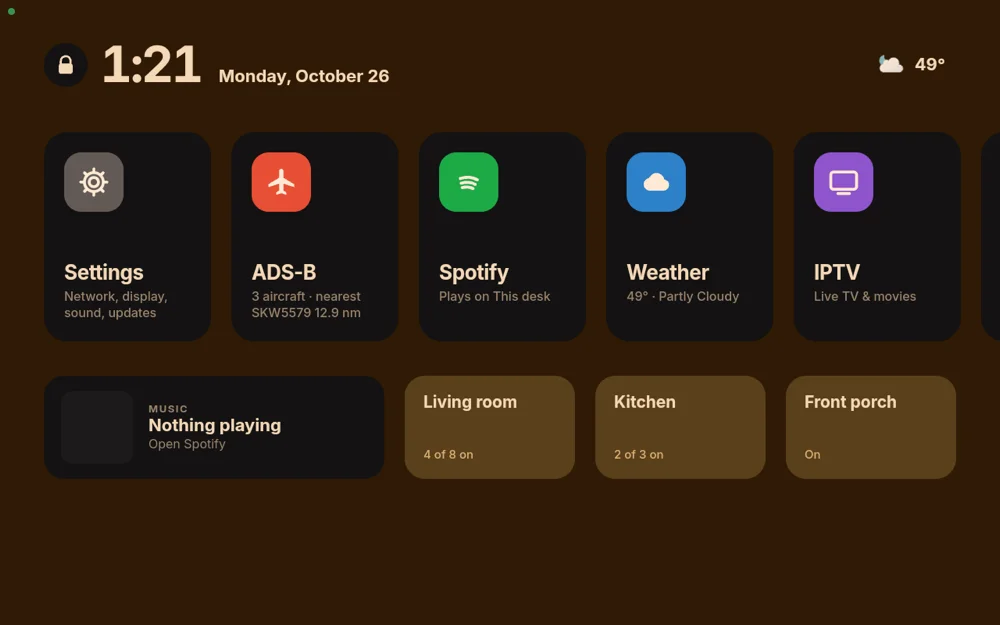
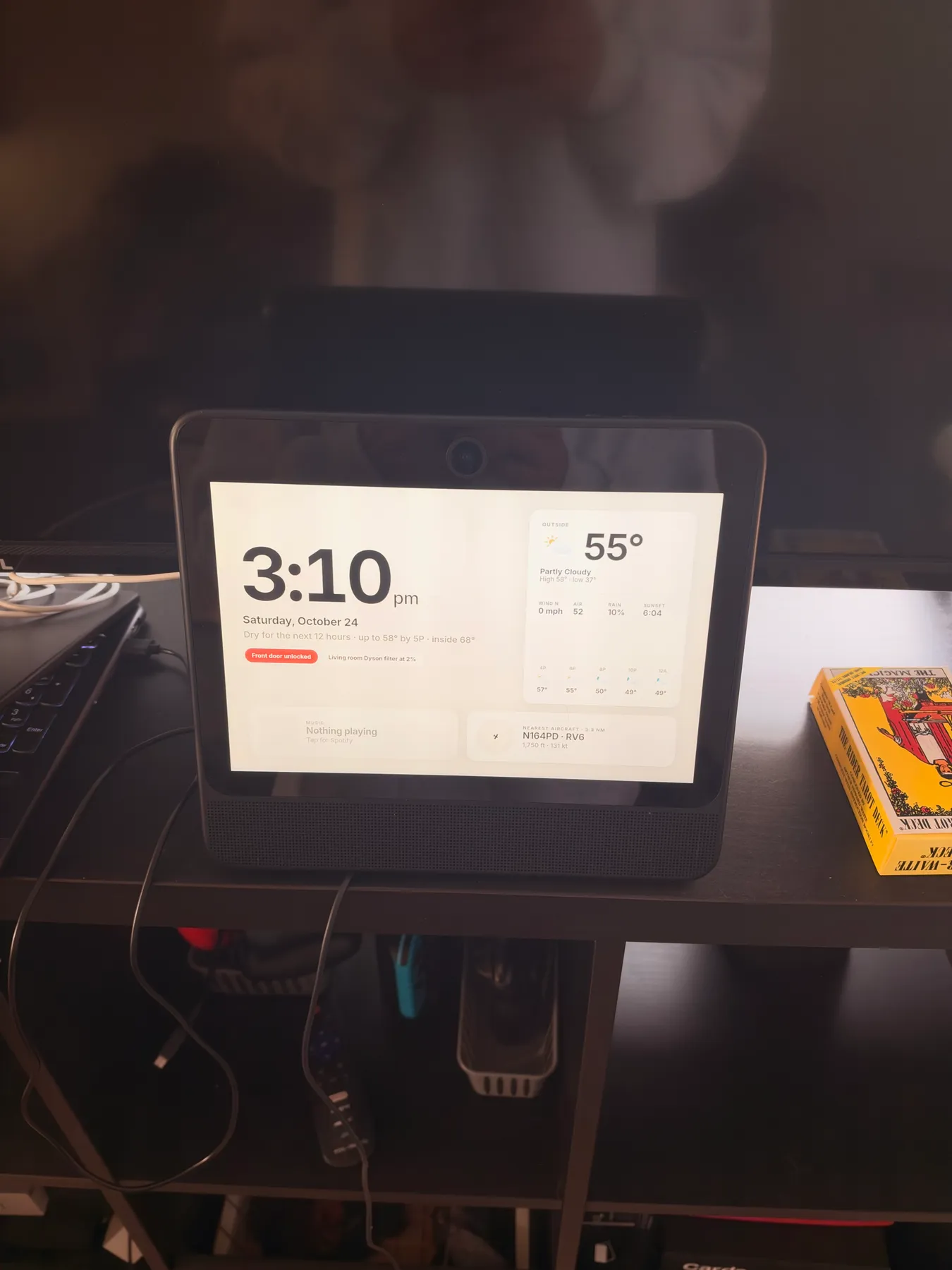
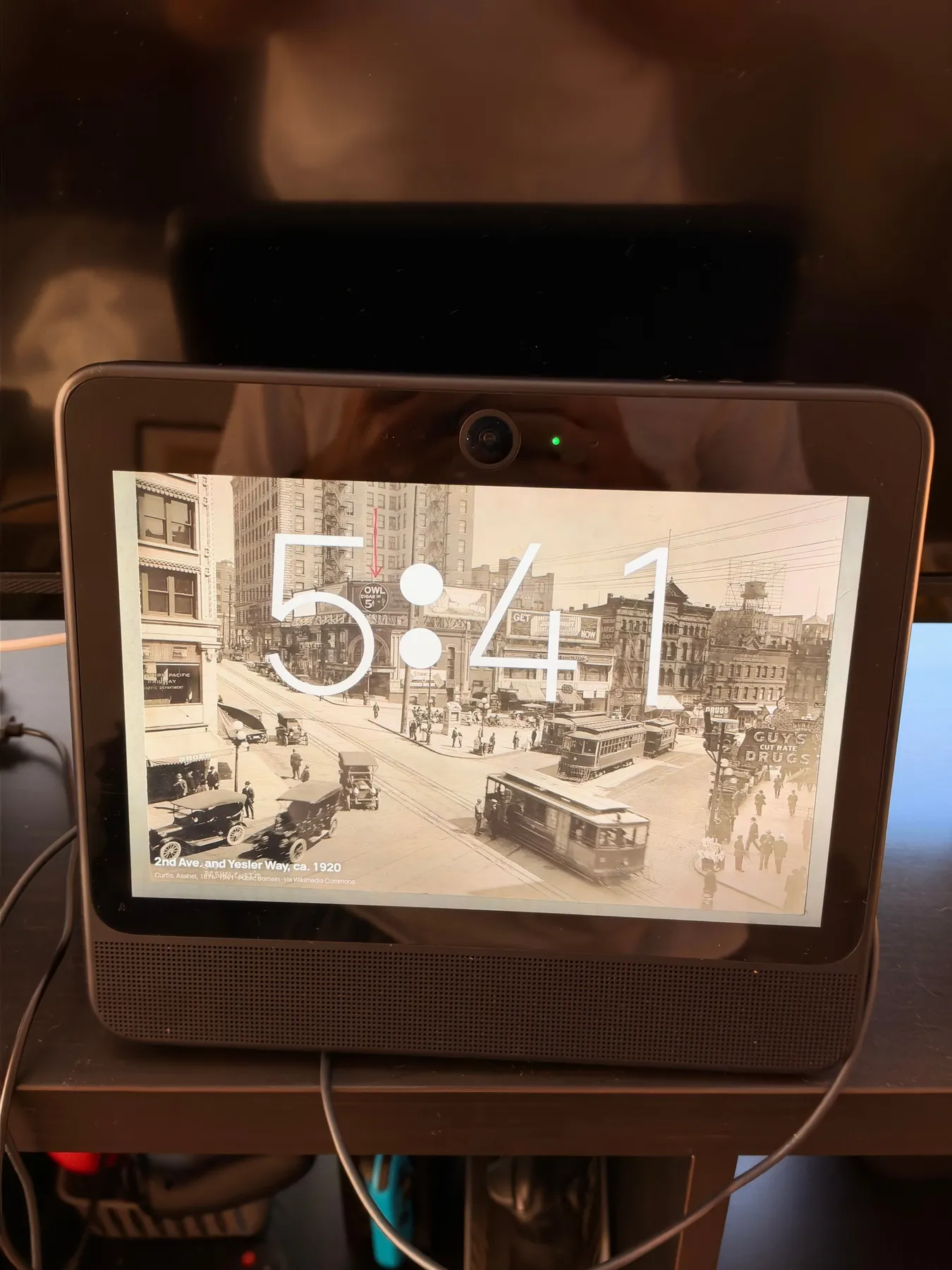
A discontinued first-generation Meta Portal turned into a desk control panel: my own kiosk APK as the home screen, a native Spotify Connect receiver in Rust, live aircraft, home controls and news, with no root and no exploits.
01 / Problem
Good hardware, abandoned software, locked bootloader
The first-generation Meta Portal is a 10.1" 1280×800 screen on a Snapdragon 835-class chip with 3.7 GB of RAM, four microphones and Widevine L1, and Meta has stopped developing it. The bootloader is locked and verified boot is green, so a custom ROM is not possible. Everything had to happen at the application level over ADB, keeping the Facebook login that ADB access depends on, and with no exploits.
02 / On the desk
The real device
03 / What I built
01 →
Kiosk APK as HOME
com.spencerdavis.desk, built without Gradle, boots straight into the desk app and exposes a narrow JS bridge gated to my server's origin.
02 →
Away screen + launcher
Clock, weather, now playing and nearest aircraft when nobody is near; Spotify, ADS-B, Home, News on touch or when the room lights jump.
03 →
Ambient brightness & warmth
The only sensor is an AL3010 lux meter: native brightness from lux, CSS warmth from sunset + lux (no Night Display on this build).
04 →
Native Spotify Connect
librespot 0.8 cross-compiled from Rust to arm64 as a JNI library: the Portal appears as a speaker in the Spotify app.
05 →
Over-the-air web updates
The page watches its own ETag and reloads within a minute of a deploy, holding the reload while something is playing.
06 →
DevTools over CDP
WebView DevTools forwarded over ADB + SSH, so screenshots and Desk.open('adsb') can be scripted from a laptop.
04 / Benchmark
Measured before and after disabling Meta's camera AI service
| Metric (launcher screen) | Before | After |
|---|---|---|
| Busy CPU cores (of 8) | 2.74 | 0.77 |
| Cores 0–3 busy | 62–71% | 16–20% |
| Meta aiservice (% of one core) | 130% | 0 |
| Camera provider (% of one core) | 72% | 0 |
| Threads, all processes | 2,585 | 2,412 |
| Memory used by aiservice (PSS) | 283 MB | 0 |
| Load average (1 min) | 10.2 | 6.7 |
05 / Engineering discipline
Read-only first
Hardware was inventoried with read-only ADB before any change. Every install, setting or reboot needed explicit owner approval.
Label every finding
Handoff docs mark each claim Confirmed (measured), Researched (cited) or Hypothesis, which is why the benchmark above flags its own contamination.
Keep an escape hatch
A two-finger hold exits to a fallback launcher, and the launcher conversion has a scripted revert.
Fail toward working
Stalls, unavailable media and codec mismatches are detected from logs and handled with reconnects or server-side transcoding, not error screens.
06 / Screens